
How we built MetlSys.
An ERP for steel and stainless stockholders, built because the trade had spent decades running on generic software plus a great deal of human glue. This is what that took, and what it says about how we approach a bespoke build.
A trade where the paperwork is the product.
Steel stockholding has an obligation most industries do not: every piece of material has to be traceable back to the cast it came from, with the mill certificate to prove it.
Generic ERPs handle stock as interchangeable units. Steel is not interchangeable: two bars of identical specification from different casts are different material with different paperwork. Cut one in half and you now have two items that must both still know where they came from.
So the trade fills the gap by hand. Certificates live in filing cabinets, inboxes and shared drives organised by supplier rather than by heat. Heat numbers get re-typed between systems. An offcut goes back in the rack and quietly loses its identity. None of it is visible on a balance sheet, and all of it costs — in time, in stock that cannot be sold as certified, and in the twenty minutes a customer will not wait for on a Friday afternoon.
There is more on the standard itself in our guide to EN 10204 mill certificates.
Four choices the whole system rests on.
Most of what makes a system feel obvious to use was decided before any screen was designed.
Model the traceability, don't attach it
The obvious build is a document store: scan the certificate, tag it with an order. It works until the first bar is cut. Making the heat a first-class record that every downstream item descends from is more work at the start and is the only version that survives an audit two years later.
Learn the trade before designing screens
Words like heat, cast, batch and lot are used loosely in conversation and precisely in a specification. Getting that vocabulary wrong in the data model is the kind of mistake that is cheap on day one and structural by month six.
Let the paperwork read itself
Every manual transcription of an alphanumeric cast number is a chance to create stock that can never be matched to its certificate again. AI capture earns its place here specifically because it removes a data-integrity risk, not because it is fashionable.
Ship increments the trade can use
The same approach as any bespoke build: working software in pieces you can put in front of people, rather than a reveal after six months. What gets built next is decided by what the last piece taught us.
One system, the length of the job.
Everything below is software we can show you working, on a demo account, in half an hour.
Goods-in to invoice
Receipt, weighing, stock, works orders, picking, despatch and invoicing as one flow rather than six systems and a shared drive.
Heat traceability in the spine
The cast is a record, not a text field. Anything cut from it inherits the link, so an offcut back in the rack is still identified.
AI document capture
Mill certificates and supplier paperwork read on arrival instead of re-keyed, which removes the most common way a heat number gets lost.
Outprocessing
Material sent out for machining or testing tracked off site and back, with parentage intact through the round trip.
Customer portal
Customers pull their own certificates, delivery notes and invoices, rather than ringing the office for copy documents.
Cut-piece pricing
Pricing that understands the difference between a fixed-price length and material billed on the weight that actually goes out.
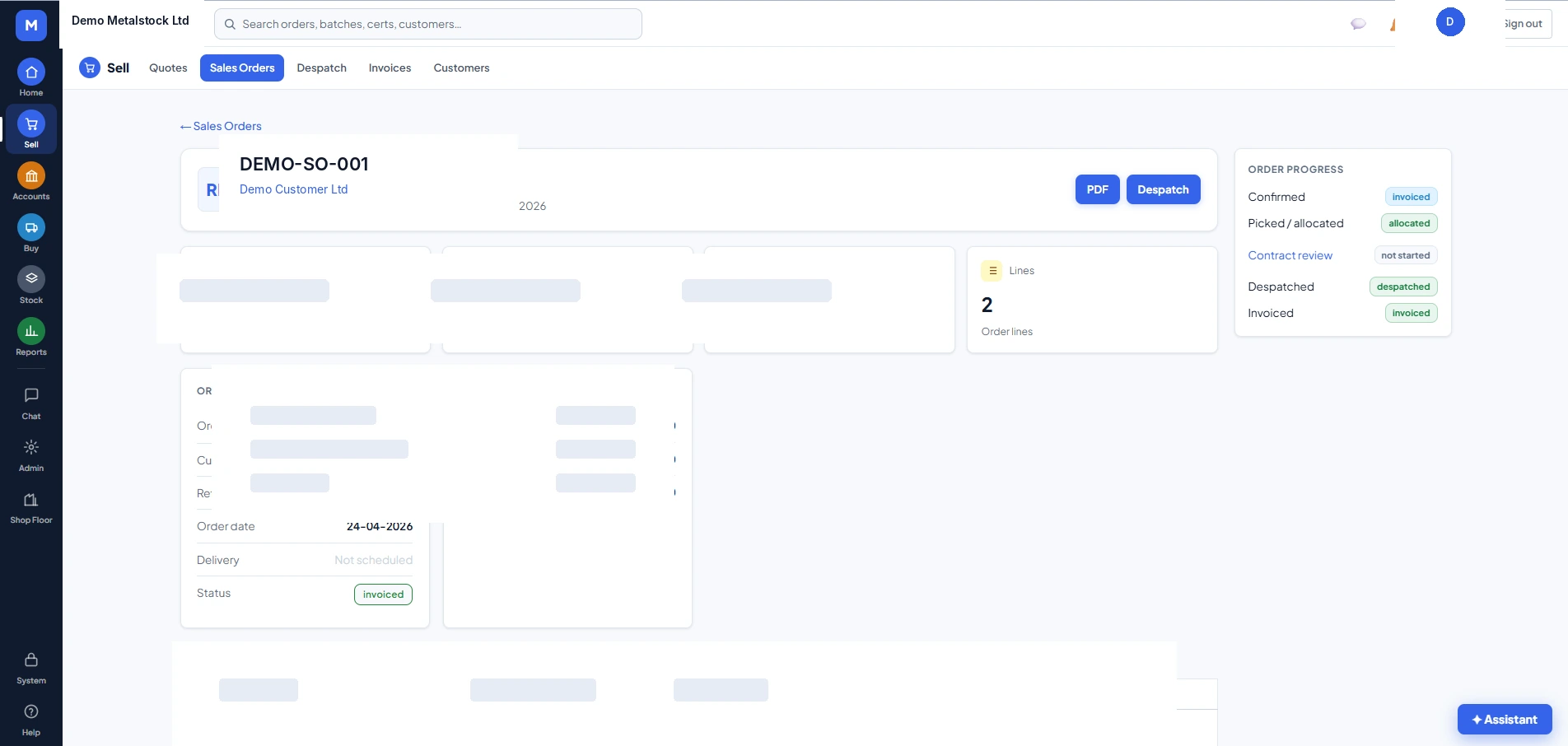
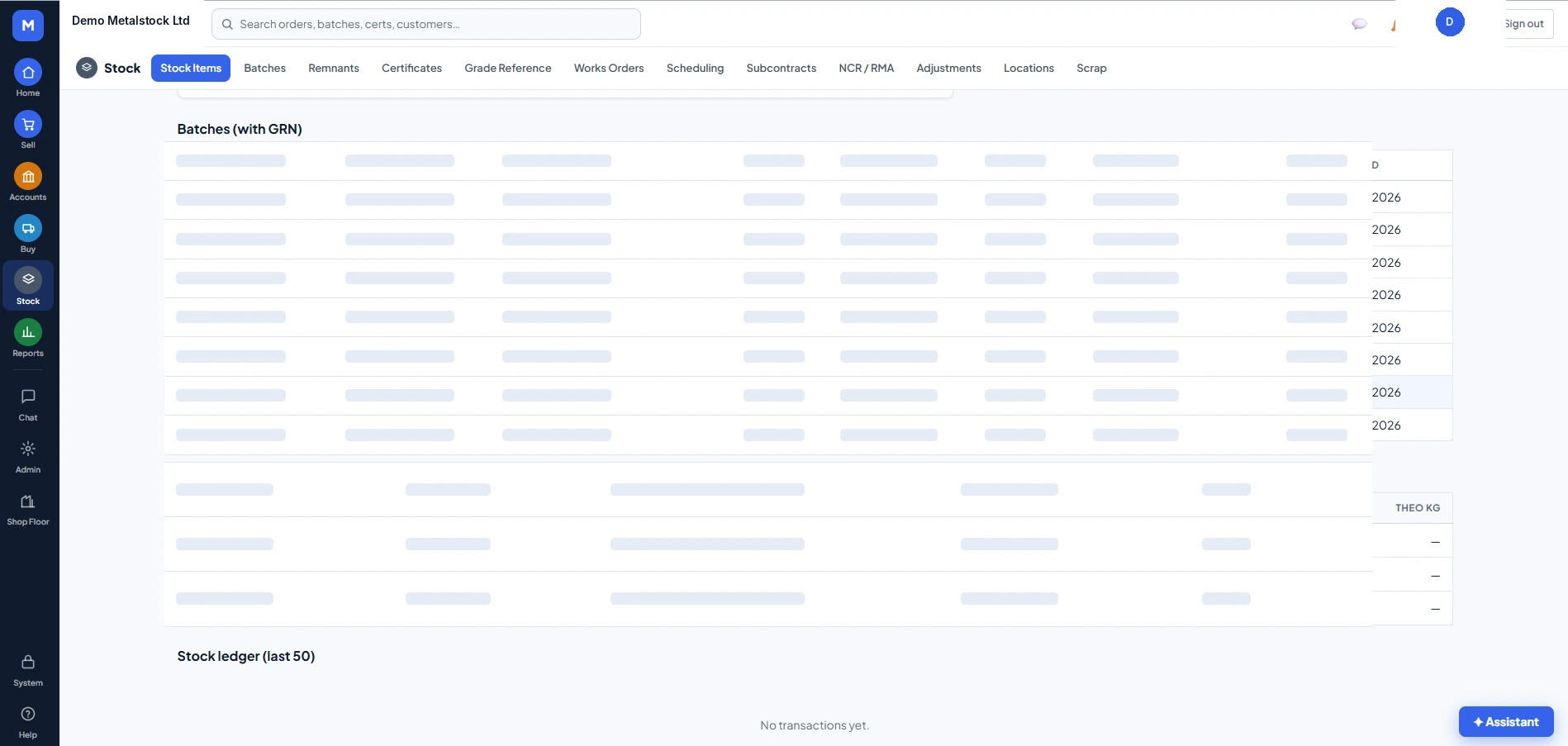
Real screens, not mock-ups.
Actual MetlSys screens, with every customer, financial and transaction detail masked.
Most of this was not about steel.
Strip out the metallurgy and what is left is the pattern behind every build we do.
Learn the trade properly before designing anything. Find the thing the business is doing by hand because no product understood it. Get that into the data model rather than bolting it on beside. Then ship it in pieces people can use, and let what they learn decide what comes next.
That is the same method whether the output is a product for a whole industry or one system for one business. The difference is only how many companies have the problem.
Honest notes on this page
We have not named a customer and we have not published a percentage. Naming a stockholder needs their written consent, and a savings figure needs numbers we can stand behind rather than ones that sound good.
What we will do instead is show you the software and let you judge it. That is a claim we can keep.
Ask for a walkthroughGot a process that hurts?
Book a free process review. Thirty minutes, one process, and an honest answer on whether software would pay for itself.